
The BSES Rajdhani DT-ESS project is a pioneering initiative in the Indian power sector, marking the country’s first successful implementation of a Virtual Power Plant (VPP). Executed by AmpereHour Energy in collaboration with battery partner Coslight, the project consists of six distributed Battery Energy Storage Systems (BESS) integrated into the low-voltage side of distribution transformers across South and West Delhi. This network is centrally managed to provide peak shaving and grid stability, serving as a high-tech blueprint for urban energy management.
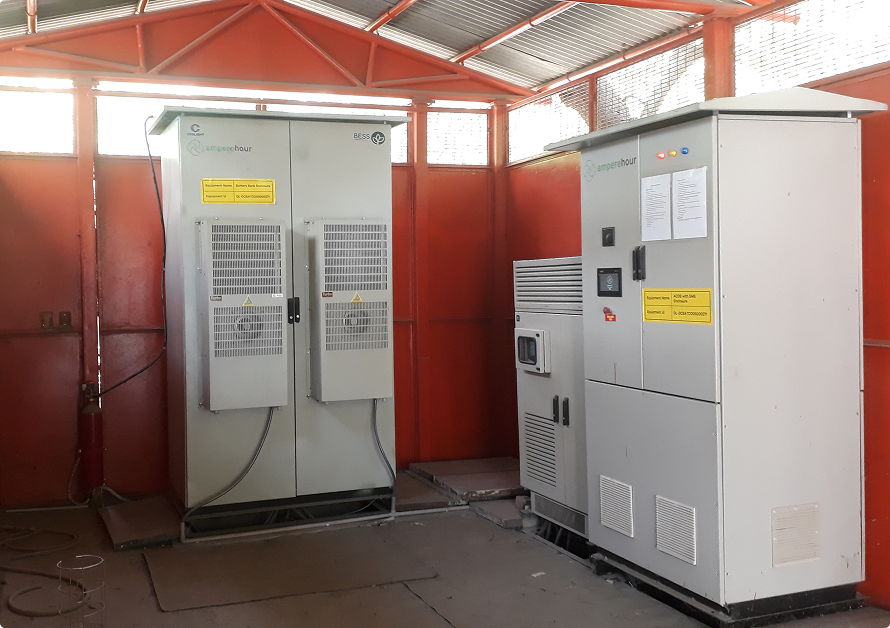
Client: BSES Rajdhani Power Limited (BRPL)
Partner: Coslight (Battery Partner)
AmpereHour Scope: Turnkey BESS (End-to-end design, implementation, and central software)
Commissioning Date: First week of December 2021
Location: 6 Sites in Delhi (Vasant Kunj, Tughlakabad, Janakpuri B3 & B6, Pratap Market, and Lajpat Nagar)
Total Power Capacity: 0.51 MW (510 kW)
Total Energy Capacity: 1.05 MWh (Installed as 1.25 MWh to ensure committed delivery)
The project’s most innovative feature is its centralized control architecture, which transforms six physically separate sites into a unified utility asset.
The system was specifically designed to address local grid constraints at the Distribution Transformer (DT) level:
Completed despite the logistical hurdles of the COVID-19 pandemic, this project achieved a high overall system availability of 96.1%. It stands as a “first-of-its-kind” proof of concept, demonstrating that distributed storage can be aggregated via software to provide grid-scale benefits, paving the way for larger utility-scale BESS deployments across India.
Share:
We will be there at India Energy Storage Week (IESW)
2026 is scheduled for July 8–10, 2026, at
Yashobhoomi (IICC) in New Delhi.

Yashobhoomi (IICC)
July 8–10, 2026 | New Delhi
BLOG
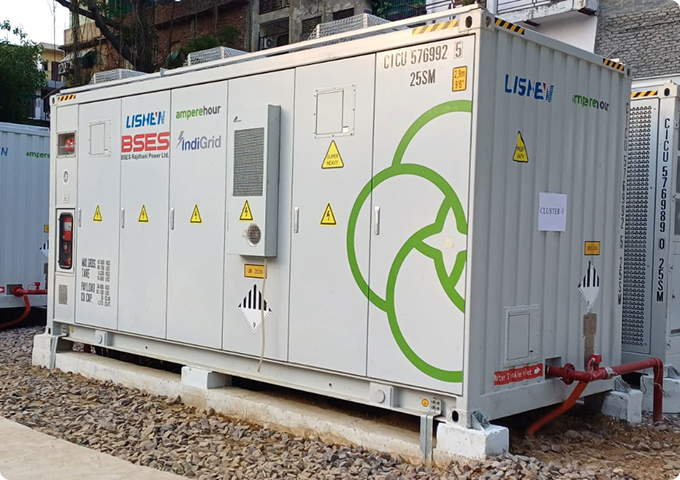
The Kilokari BESS Project: A Blueprint for Urban Energy Resilience
The Kilokari BESS Private Limited (KBPL) project stands as a landmark in India’s
March 2025
BLOG
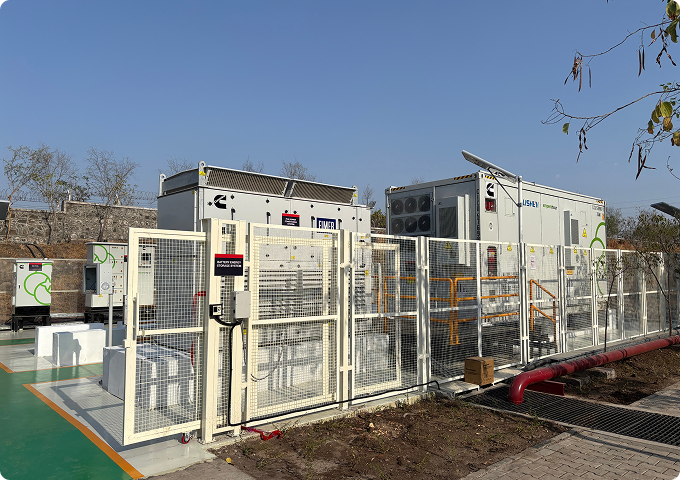
Cummins PHP: Strengthening Industrial Resilience in Phaltan
The Cummins PHP project represents a significant advancement in Behind-the-
February 2025
@AHE2026
Maintained by AmpereHour Energy
Designed & Developed by DigiChefs