
Direct-to-Battery PV + BESS is a DC-coupled energy conversion system that connects solar panels directly to the DC battery bus. By eliminating the traditional “AC link” between solar generation and storage, the system bypasses redundant conversion steps, moving from a standard four-stage process to a single-stage conversion

PV+storage systems deliver more energy and have a lower capex compared to other approaches
The D2B Advantage = More Energy + Lower Capex + Future Proof
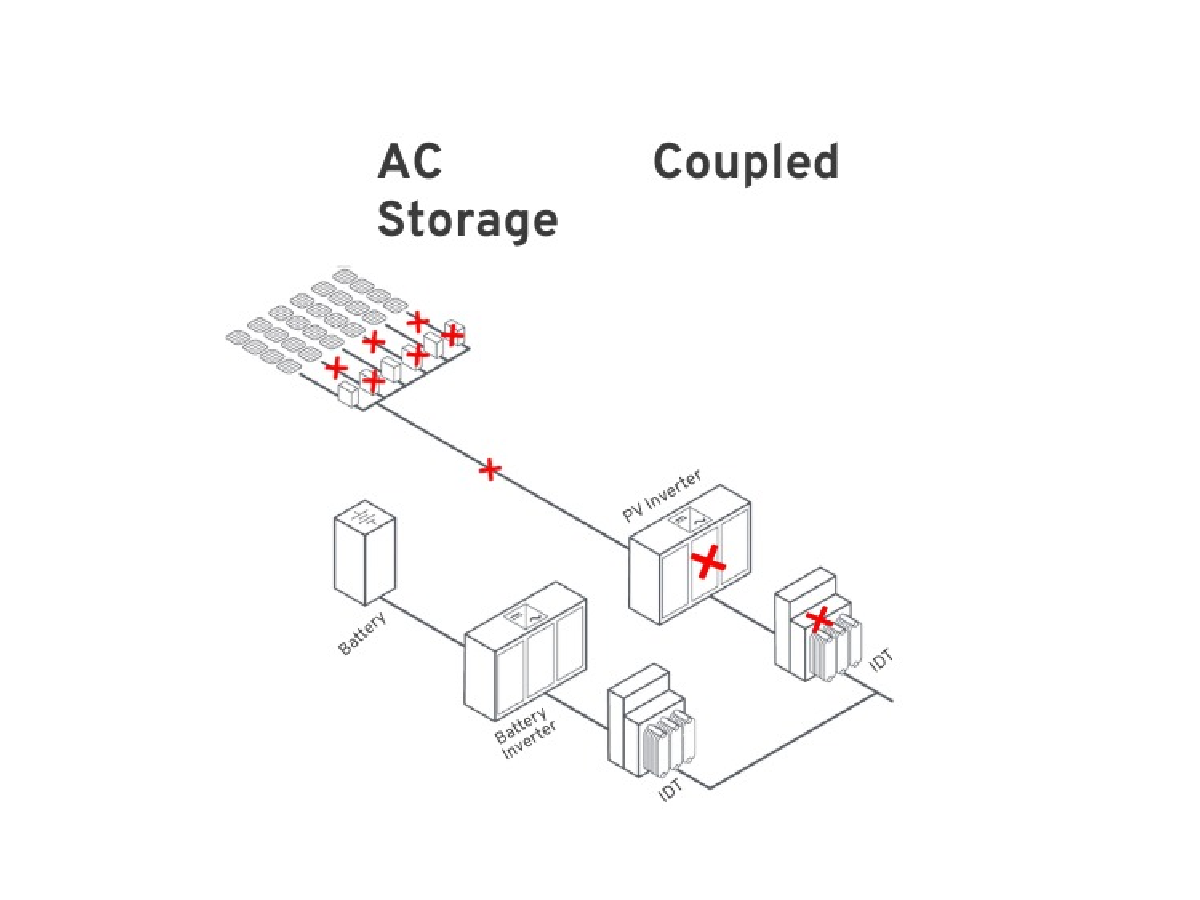
AC-Coupled Storage
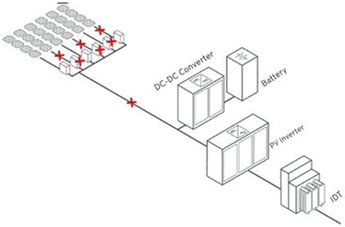
DC-Coupled Storage
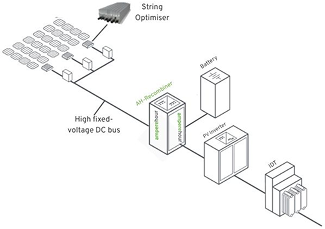
Optimised DC Coupled Storage
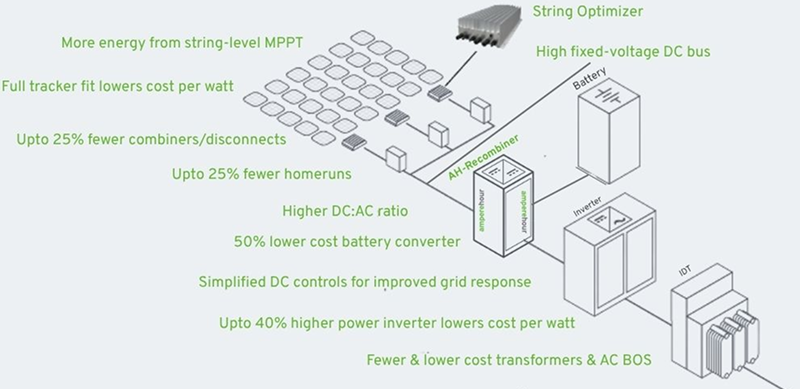
More energy etc from the diagram above.
Stop losing power to AC conversions. Achieve 88.5% round trip efficiency with AmpereHour’s DC-coupled architecture. Reduce system losses and additional costs, and maximize performance by integrating solar directly with the battery bus
Achieve standalone storage responsiveness with higher performance and lower system cost than central DC/DC converter architectures
Enable 88.5% conversion efficiency and improved long-term system performance with its string-level MPPT and passive cooling (no moving parts)
Ensures simplified deployment with footprint-free converters, exact PV array sizing, and installation without cranes or concrete foundations
1.AC-Coupled Storage
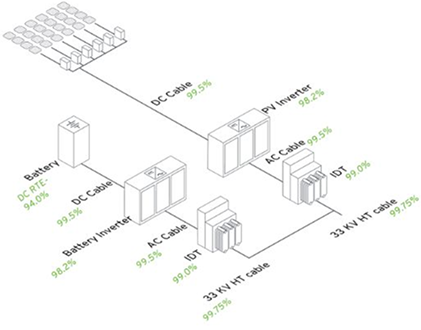
PV to Battery
Battery to 33KV
83.2% round-trip
2.DC-Coupled Storage
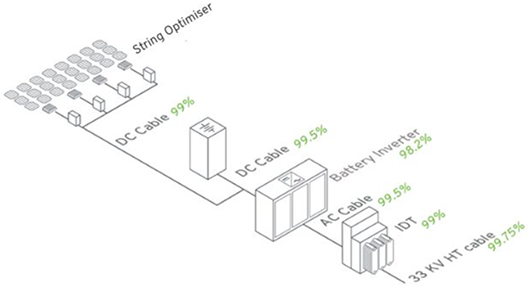
PV to Battery
Battery to 33KV
88.5 % round-trip
+5.3%
Clipped and curtailed energy captured and stored Project Yield Uplift
Direct-to-Battery eliminates intermediate losses that AC-coupled systems can’t recover.
Capture, store, and deliver more usable energy from the same solar asset and maximise ROI
Save on the costs from day one by minimizing the EBOS and Ess hardware
Reduce upgrade costs and maintain long-term ROI as system components and market needs evolve with technology
Maximise system efficiency by reducing losses across conversion, curtailment, and mismatch
Minimize costs and maximise ROI with lower capex.
Reduces costs on day one by minimizing Balance of System (EBOS) components, energy storage system (ESS) hardware, and the number of inverters required
Delivers up to 5.3% higher project yield by capturing energy that is typically lost during AC/DC conversions
The modular nature of DC-coupling makes it simpler and cheaper to add or replace storage and PV modules as technology evolves over the project’s lifespan
Maximise system efficiency by reducing losses across conversion, curtailment, and mismatch
The efficiency of the D2B model is driven by a streamlined five-step pathway:
Optimizers regulate power at the source to mitigate mismatch losses
Power flows straight to the DC bus, enabling a near- instantaneous grid response
Optimizers regulate power at the source to mitigate mismatch losses
Energy is only converted to AC when it is ready to be exported to the grid
Removing unnecessary transformers and inverters reduces heat loss and hardware failure points
Commercial Insight: In a 100 MW project, a ~5% efficiency gain can translate into millions in additional lifetime revenue
| Features | Standard AC-Coupled | AHE Direct-to-Battery |
|---|---|---|
| Power Path | PV → DC/AC → AC/DC → Battery | PV → DC/DC → Battery (Direct) |
| Conversion Steps | 4 Steps conversion with additional inverters and transformers | 1 Step conversion without any additional inverters, minimising the losses. |
| Round-Trip Efficiency | ~83.2% | ~88.5% (Best in Class) |
| Clipping Recapture | Is lost as heat during the 4-step conversion process | It is captured & stored with every conversion cycle |
| Equipments | Duplicate Inverters & Transformers | Simplified DC Bus |
Capture more solar energy using the same infrastructure footprint, boosting the revenue for each installed MW
Minimize both capital expenditure and lifetime operating losses by cutting down on conversion steps with DC-coupled energy conversion
Simplified design eliminates the need for redundant inverters, transformers, and switchgear, improving the overall reliability and reducing maintenance needs
Direct DC integration allows for quicker system response and improves participation in ancillary services and peak-pricing markets
With hardware-agnostic design, higher efficiency, and simple architecture, ensure compatibility with advancing battery technologies without redesigning the system infrastructure
Stop Letting Conversions Eat Your Revenue. Recapture your lost energy with AmpereHour
@AHE2026
Maintained by AmpereHour Energy
Designed & Developed by DigiChefs